
The Pros and Cons of Doing Your Own Thing (Professionally)


It feels like I keep getting different versions of the same question – when does it make sense to do your own thing professionally and when should you work for someone else?
I’ve chosen my own path for most of my career. Constitutionally, I’m not designed to function inside of a large organization. I’ve always been a misfit and doing my own thing has really been the only option that has ever felt right.
If doing your own thing works – if you can create new businesses, new ideas, new organizations, new concepts, new content that has real value – it can be great. At its best, it means you make more money, you have near total agency, you can often pick what you work on, do things that feel meaningful and work with people you like. If you can pull it off, you should do it. It’s better than working for someone else, it’s better than your work being derivative of someone else, it’s better than being proximate to power.
If you’re deciding whether to do your own thing, here are eight things you need both to understand and be okay with. Because if you’re not, you’re really gonna hate it.
(1). You own all of the risk, always. If you own the company, when you lose clients or investments fail or when revenue falls short, it’s always your problem. You have to figure out how to fill the gap, you have to hustle, you have to sweat it out. Every. Single. Time.
(2). You have to create from scratch, every time. Every time we want to do something new, whether it’s launching a venture fund or a bookstore or an AI tool or a podcast or campaign to get rid of scaffolding or anything else, we have to figure it all out and make it all happen. It’s a lot.
(3). It’s always difficult. By definition, doing anything worthwhile is never easy (if it were, anyone could do it). But if you are a serial entrepreneur (economic, social, political, artistic), you’re always failing at something. If not, you’re way too risk averse. If you want smooth sailing all of the time, do not start your own venture/ company/ organization/ fund, etc… Ownership and autonomy are great but they are often not analogous with ease and contentment.
(4). You own every loss. Every business we start that fails, every startup we invest in that goes to zero, every candidate we back who loses, every cause we back that stalls — we own every one of them. There’s no one to hide behind. You win, you get the credit. You lose, you take the blame. Always.
(5). You’re always in charge. In every meeting, you’re the decision maker. Every time there’s internal conflict, it’s your job ultimately to resolve it. Owning your own entities usually means a lot of selling and whether that’s in a pitch or a speech or making your case on tv, you have to be on almost all of the time. And the follow up? For literally everything? It’s ultimately always on you. Things only happen when someone makes them happen.
(6). You’re never truly off. You can take vacations, but I have yet to experience one where I don’t check my phone and don’t deal with something work related each day. You can have your weekends, but not without some amount of work each day. That’s a sacrifice you have to be willing to make.
(7). You have to be comfortable not fitting in. The upside of doing your own thing is that you have the freedom to speak frankly, publicly and regularly. But speaking truth to power also means pissing people off. It can cause you to lose clients, business, investors, opportunities. If the love and acceptance of the establishment is important to you, then you’re probably better off working off of a platform that’s both bigger than you and was established long before you. If knowing that you can say and do what you think is right and you can handle the consequences that come with it, then independence makes sense.
(8). Attaining status is harder. While attaining wealth is easier if you own the company (assuming it succeeds), if you work in a senior role at a prestigious conglomerate or firm or fund, you get the leverage of their entire reputation. When you’re a serial entrepreneur, you’re on your own, so everything you do is built on your own back, not someone else’s.
If the risks and downsides described above haven’t scared you off, then you might have the right personality, the right stomach, the right mettle, the right risk tolerance to start and own your own companies and organizations. If that’s you – do it. The upside is tremendous. Full stop.
But if you know deep down that the challenges above would make you miserable, then listen to yourself. If the sacrifices above are sacrifices you don’t want to make, then even if you succeed, you still probably won’t enjoy it. Doing your own thing is both really great and really hard. And from what I’ve learned, that never changes.
Sign our petition here.
Reverse the Eviction: Save Common Table Soup Kitchen
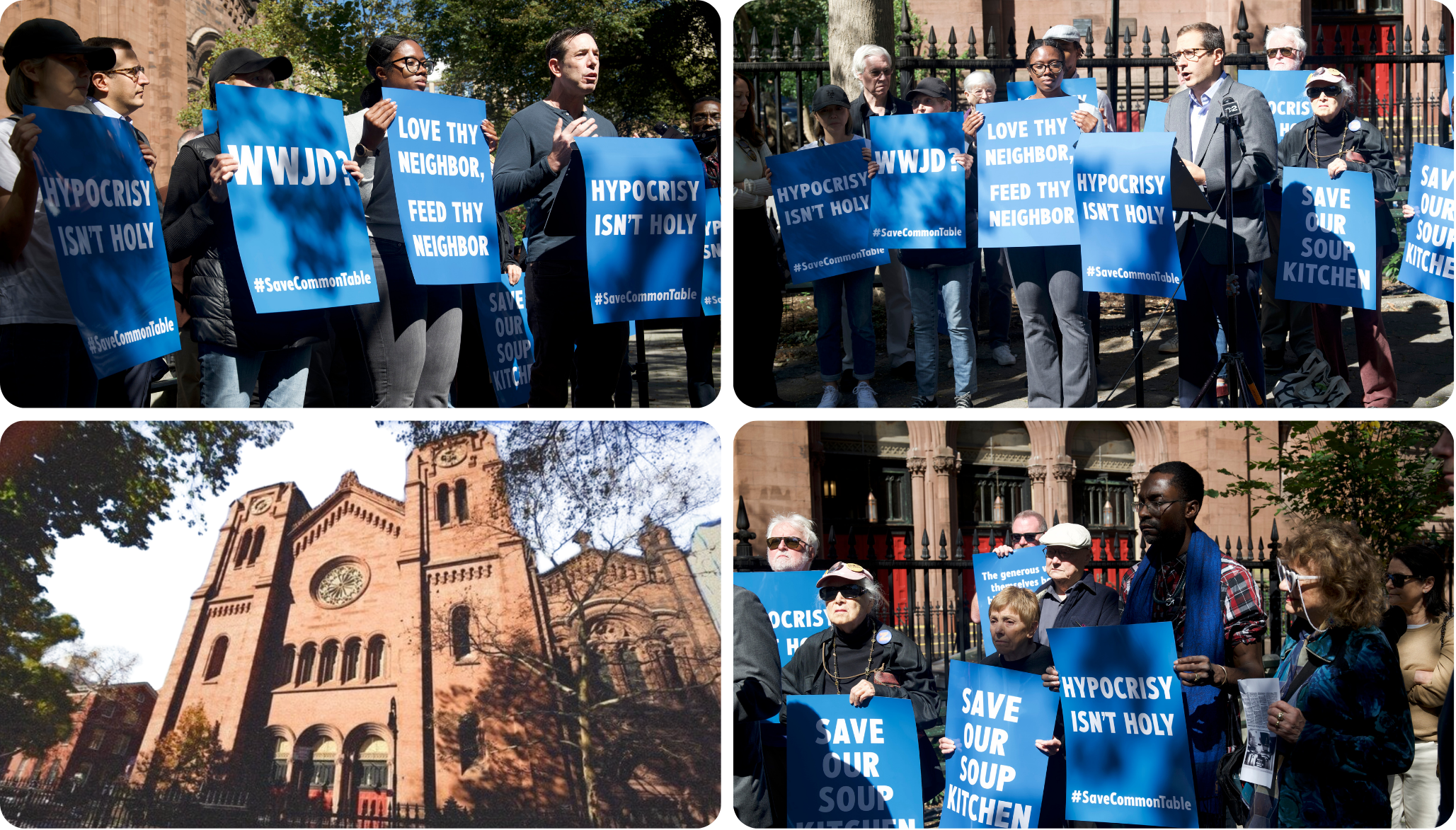
For over a decade, I have had the honor and privilege of volunteering at the Common Table soup kitchen. I have witnessed firsthand the impact it has on the lives of hundreds of homeless individuals across New York. It has been more than a place of sustenance; it has been a sanctuary, a community, and a beacon of hope for those in desperate need. The recent decision by Calvary-St. George’s Church to evict Common Table is not just a logistical misstep – it’s a betrayal of compassion.
Common Table has been serving the Gramercy community for over 25 years, offering warm meals and a comforting space for those often left in the shadows. This abrupt eviction, prompted by new rules from Rev. Jacob Smith, which bar guests from using bathrooms and compel them to eat outside, threatens to dismantle a lifeline for many vulnerable New Yorkers.
We cannot stand by as bureaucratic decisions strip away essential services crucial to our community’s wellbeing. With winter approaching, the need for indoor dining and bathroom facilities becomes even more critical. This decision doesn’t just impact the homeless; it impacts the volunteers, the community leaders, and everyone dedicated to battling hunger and homelessness in our city.
I am personally committed to finding a solution to this crisis. I have offered to cover the expenses necessary to maintain the Common Table’s operations. However, we need Calvary-St. George’s Church to stand with us in this endeavor and allow the soup kitchen to continue its mission.
Join us in urging Rev. Jacob Smith and the leadership at Calvary–St. George’s Church to reverse the eviction and reinstate this vital service. Invite them to embrace the true essence of community and support those less fortunate. By signing this petition, you can help bring back Common Table and restore its rightful place in Gramercy. Let us reaffirm our commitment to compassion and humanity. Please sign and share this petition to make your voice heard.
Timing matters a lot too. If you’re a new grad, there’s optionality to exploring an idea you’re passionate about, learning how to use new tools, and seeing where things go while on the job hunt. The technological barriers to entry have never been lower to build something of value at now/low cost.
Also, life happens, and windows of opportunity open & close. For many, the equation will change from what your personal risk tolerance is to what your partner’s/family’s risk tolerance is (it did for me)!